

Good news in Orford
Orford Ness closed for the season on 26 September. If you didn't notice, that's rather the point — it's one of those quiet, procedural closures on the Suffolk coast calendar, a line in a National Trust diary rather than a headline. No open days now until May. But stand on the shingle at Shingle Street on a sharp, blue afternoon this month and you might just catch the real reason why: a grey head breaking the surface, watching you back.
Orford Ness's ten miles of shingle spit — the strange, flat, faintly military landscape between Orford and Aldeburgh, where Cold War transmitter masts still stand over tern colonies and sea kale — is becoming one of the most significant grey seal breeding grounds on the East Anglian coast. Last winter, 430 pups were born out there. That's an 88% jump on the year before, and the fourth consecutive season of growth: 25 pups in 2021–22, then 66, then 133, then 228, now 430. Rangers also counted 803 adult seals hauled out on the spit — the highest number recorded at the site.
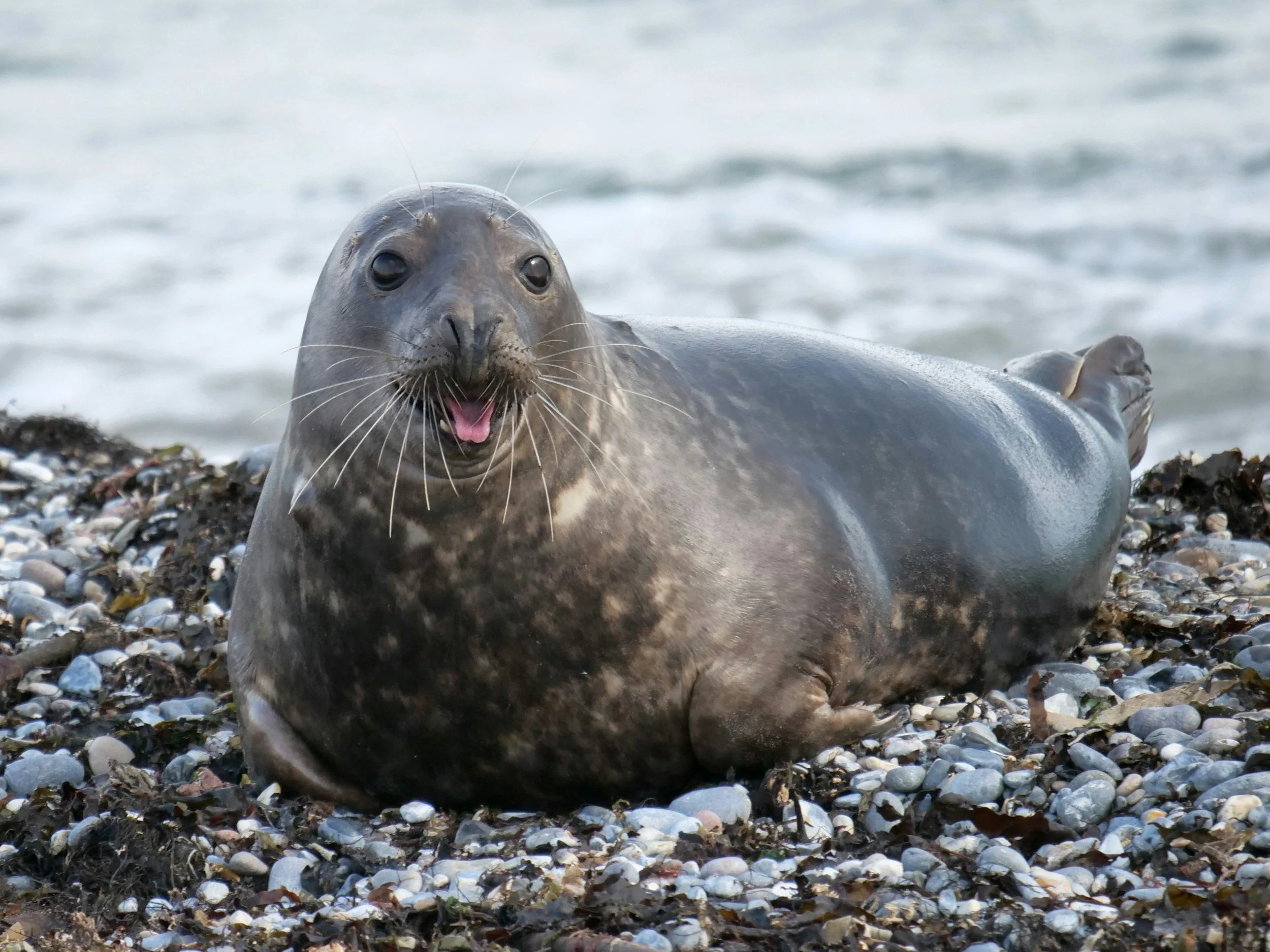
None of which you're meant to see up close. That's exactly why the gates are shut: the Trust closes the reserve specifically through pupping season, which runs roughly October to March, because disturbance — a curious walker, a drone overhead, even a dog off the lead — can be enough to make a mother abandon a pup on the shingle. So the counts happen at a careful distance, once a week, by rangers who know precisely how close is too close. The rest of us get the view from the water, or from the shoreline between Aldeburgh and Shingle Street, where a bobbing head in the grey-green swell is, this month, more likely to be a seal checking you out than anything else.

There's something very Suffolk about a landscape that protects itself by going quiet rather than by making a fuss — and about a place whose busiest, most consequential season is also its least visible one. It's the same logic, in miniature, that applies to a lot of second homes along this stretch of coast through the autumn and winter: the owners are back in London, or wherever home-home is, and the house sits closed up, unremarkable from the lane, doing nothing dramatic at all. Which is exactly when it needs someone who notices the small things — a slipped roof tile after the last blow, a parcel left on the step, the boiler that decides to play up on the one proper cold snap in November — before any of it becomes a story worth telling.
We spend a fair amount of this time of year doing the coastal equivalent of a ranger's weekly count: not interfering, just checking in, quietly, so that whatever's ticking along out of sight stays exactly as it should be until the owners are back to see it for themselves.